


Imagine if artificial intelligence could change how we learn and teach. AI is making big changes in education, offering personalized learning and better teacher skills. As AI gets smarter, it’s making education more effective and easy to manage.
Many wonder if AI can really help students do better and make learning fun. AI can look at lots of data to find where students need help. This is just the start of how AI is changing education, with many benefits to come.
Key Takeaways
- Artificial intelligence in education is transforming the learning landscape
- AI provides personalized learning experiences and enhances teacher effectiveness
- The benefits of AI in learning include improved student outcomes and more efficient instruction
- AI can analyze vast amounts of data to identify areas where students need improvement
- How AI is Transforming Education is a rapidly evolving field with immense potential
- AI is making learning more engaging and effective
- The future of education will be shaped by the integration of AI and learning technologies
Introduction to AI in Education
Artificial intelligence (AI) is changing education in many ways. It includes machine learning in educational technology and AI applications in schools. AI can make learning better, help students do well, and make teachers work more efficiently. To understand AI’s role in education, we need to know what AI is and how it has grown.
AI means creating computers that can do things that humans usually do, like learn and solve problems. Over time, AI has become smarter and more useful. It’s now used in many areas, including education. Some key uses of AI in education are:
- Personalized learning experiences
- Intelligent tutoring systems
- Automated grading and feedback
AI is very important for learning today. It can change how we learn and teach. With machine learning in educational technology, teachers can make learning plans for each student. Also, AI applications in schools can do routine tasks, so teachers can focus on important teaching.
As AI keeps getting better, we’ll see more new AI applications in schools and a bigger impact of AI on teaching. AI can make learning better, help students succeed, and make teachers more productive. AI is going to be very important for the future of education.
| AI Application | Description |
|---|---|
| Intelligent Tutoring Systems | Provide personalized learning experiences for students |
| Automated Grading and Feedback | Help teachers automate routine tasks and provide instant feedback to students |
Personalized Learning Experiences
AI is changing education by making learning personal. It helps tailor lessons for each student. AI adjusts the difficulty of course materials based on how well a student is doing.
AI also helps teachers create lessons that fit each student’s needs. It considers how a student learns, how fast they learn, and their abilities. This way, AI helps students learn better and stay interested.
Some key features of AI in learning include:
- Adaptive learning pathways that adjust to individual student needs
- Real-time feedback and assessment to track student progress
- Personalized learning recommendations to help students stay on track
AI makes learning more effective and efficient. It helps teachers meet the needs of all their students. As AI gets better, we’ll see even more ways it helps in the classroom.
AI is changing education in big ways. It makes learning personal, helping students reach their goals. This is especially important in today’s complex world.
Enhancing Teacher Effectiveness
AI is changing how teachers work in schools. It offers tools for making lesson plans, grading, and giving feedback. This lets teachers save time and focus on what really matters.
AI helps teachers give each student the right support. This leads to better learning results. The future of teaching looks bright with AI.
AI tools help teachers make learning plans for each student. They can check how students are doing and give feedback right away. This makes teachers better and keeps students interested and motivated.
Some big benefits of AI in schools are:
- Automated grading systems, which reduce the workload of teachers
- AI-powered assessment and feedback, which provide students with instant feedback and help them track their progress
- Tools for curriculum development, which enable teachers to create personalized learning plans
As AI grows, it will deeply change education. Teachers who use AI can do their jobs better. They can help students succeed and shape the future of learning.
Improving Student Engagement
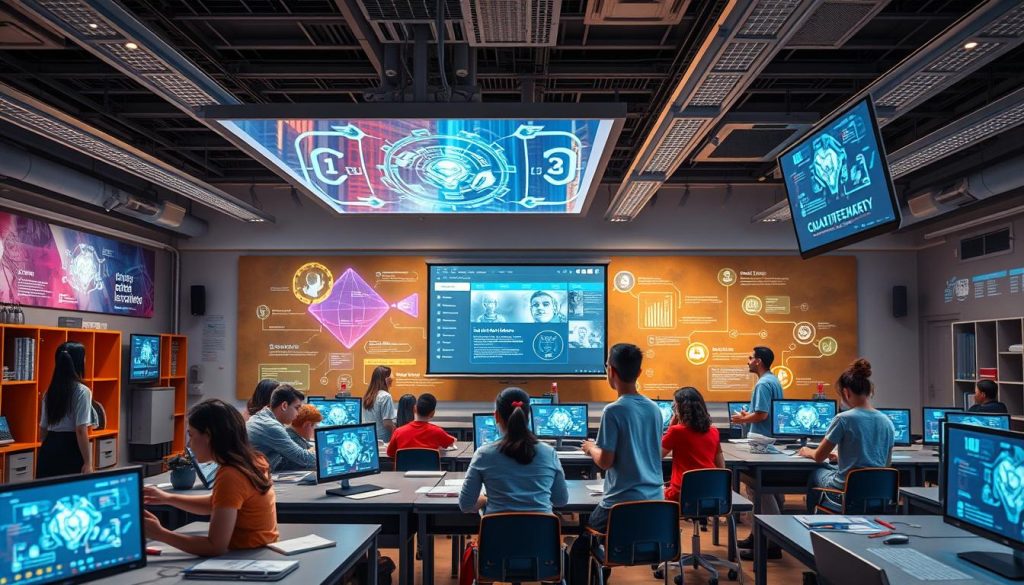
Artificial intelligence is changing how students learn and interact with school materials. It’s making learning more fun and engaging. With tools like virtual reality, students can dive into complex topics in a new way.
Machine learning helps create learning plans that fit each student’s needs. This means students can learn at their own speed. They get feedback and tips to keep them on track. This makes them more likely to stay interested and do well in school.
Interactive Learning Technologies
Some cool examples of interactive learning tools include:
- Virtual labs for safe experiments
- Interactive simulations to explore complex topics
- Adaptive learning platforms that adjust to each student’s level
Gamification and AI Learning Tools
Gamification and AI tools are making learning more fun. They add game elements to school activities. This makes learning feel like a challenge and a reward.
AI tools also give students feedback and tips. This helps them see where they need to get better. It’s a great way to keep students motivated and learning.
Administrative Efficiency Through AI
AI is changing education by making it more efficient. It helps teachers by automating simple tasks. This lets them spend more time on important things like giving students personal attention and creating new lesson plans.
AI is also making classroom instruction better. It helps teachers create learning plans that fit each student’s needs. This way, every student gets a chance to learn in a way that works best for them.
AI has also changed how schools handle their work. It can do things like grade papers and keep records for teachers. This saves teachers a lot of time. Plus, AI helps teachers understand how students are doing by analyzing data. This helps teachers know where students need help and how to improve their learning.
- Improved accuracy and efficiency in administrative tasks
- Enhanced student engagement and personalized learning experiences
- Data-driven insights to inform instructional decisions
Using AI in education makes learning better and more focused on students. As education keeps changing, AI will play a bigger role. It will help teachers give students the best chance to succeed in today’s world.
Addressing Diverse Learning Needs
AI in schools is changing how we teach, especially for students with different needs. It helps by giving personalized help to those who need it most. For example, AI tools can change learning materials into audio or captions for students who are blind or deaf.
The future of education with AI looks bright. It’s making learning more accessible for everyone. Language translation is a big help, letting students learn in their own language. This is done through live translations, helping students to do well.
AI supports diverse learning needs in many ways:
- It provides different formats for learning materials.
- It offers real-time language translations.
- It helps students with disabilities through special tools.

Using AI in schools makes learning more inclusive and supportive. As we move forward, we must think about the good and bad of AI in classrooms.
| AI-Powered Tool | Benefit |
|---|---|
| Language Translation | Enables students to access learning materials in their native language |
| Alternative Formats | Provides support for students with visual or hearing impairments |
| AI-Powered Assistants | Offers personalized support to students with disabilities |
The Role of AI in Skill Development
Artificial intelligence is changing how students learn and grow. It’s making education more relevant for future jobs. AI uses machine learning to give students real-world examples and simulations. This helps them apply what they learn to real problems.
AI helps develop important skills like:
- Critical thinking and problem-solving
- Collaboration and communication
- Adaptability and creativity
These skills are key for success in the job market. AI makes learning fun with puzzles, games, and brain teasers.
For instance, AI learning platforms offer virtual labs. Students can practice and learn safely. They get feedback to improve their skills.
AI is vital for skill development. It prepares students for future jobs. AI makes learning interactive, relevant, and feedback-driven.
| Skill | AI-powered learning activity |
|---|---|
| Critical thinking and problem-solving | Puzzles, games, and brain teasers |
| Collaboration and communication | Virtual labs and simulations |
| Adaptability and creativity | Interactive learning platforms and feedback |
Ethical Considerations in AI Education
AI is becoming more common in schools, raising important ethical questions. Its benefits in learning are many, but we must also protect student data and ensure fairness. AI can offer tailored learning experiences, but these must be transparent and accountable.
Teachers face a changing role with AI in the classroom. They must weigh the risks and benefits. One key issue is balancing privacy and personalization. This means protecting student data while still offering customized learning. It’s done by testing AI systems and being open about how they make decisions.
Ensuring Fairness and Equity
Teachers need to watch out for biases in AI learning tools. This can be done by using diverse data and checking AI for bias regularly. By doing this, teachers can make sure AI helps all students equally.
Best Practices for AI in Education
- Implement robust testing and validation procedures to ensure AI systems are fair and unbiased
- Provide transparency into AI decision-making processes to ensure accountability
- Use diverse and representative data sets to train AI systems and avoid perpetuating biases
- Regularly audit and test AI systems for bias and discrimination
By following these guidelines, teachers can make sure AI helps all students fairly. The advantages of AI in learning are clear, but we must also protect student data and ensure fairness.
The Future of AI in Education
AI is changing education in big ways. It will make learning more personal and flexible. AI-powered learning platforms will meet each student’s needs. Also, AI-powered assessment and feedback systems will give teachers real-time insights.
AI will also work with new tech like blockchain and Internet of Things (IoT). This could bring in AI-powered teaching assistants for students. It might also create learning paths that fit each student’s style.
The future of education with AI is exciting. It will change how we teach and learn. By using these new tools, teachers can make learning better for students. This will help students face the 21st century’s challenges and chances.
Leave feedback about this